Missions
Over the past year, Ecoatoms has successfully completed multiple orbital missions. In 2026, we are preparing for several additional flights while scaling our manufacturing and edge computing capabilities to support larger structures, payloads, and missions.
Join our mission
Missions
Over the past year, Ecoatoms has successfully completed multiple orbital missions. In 2026, we are preparing for several additional flights while scaling our manufacturing and edge computing capabilities to support larger structures, payloads, and missions.
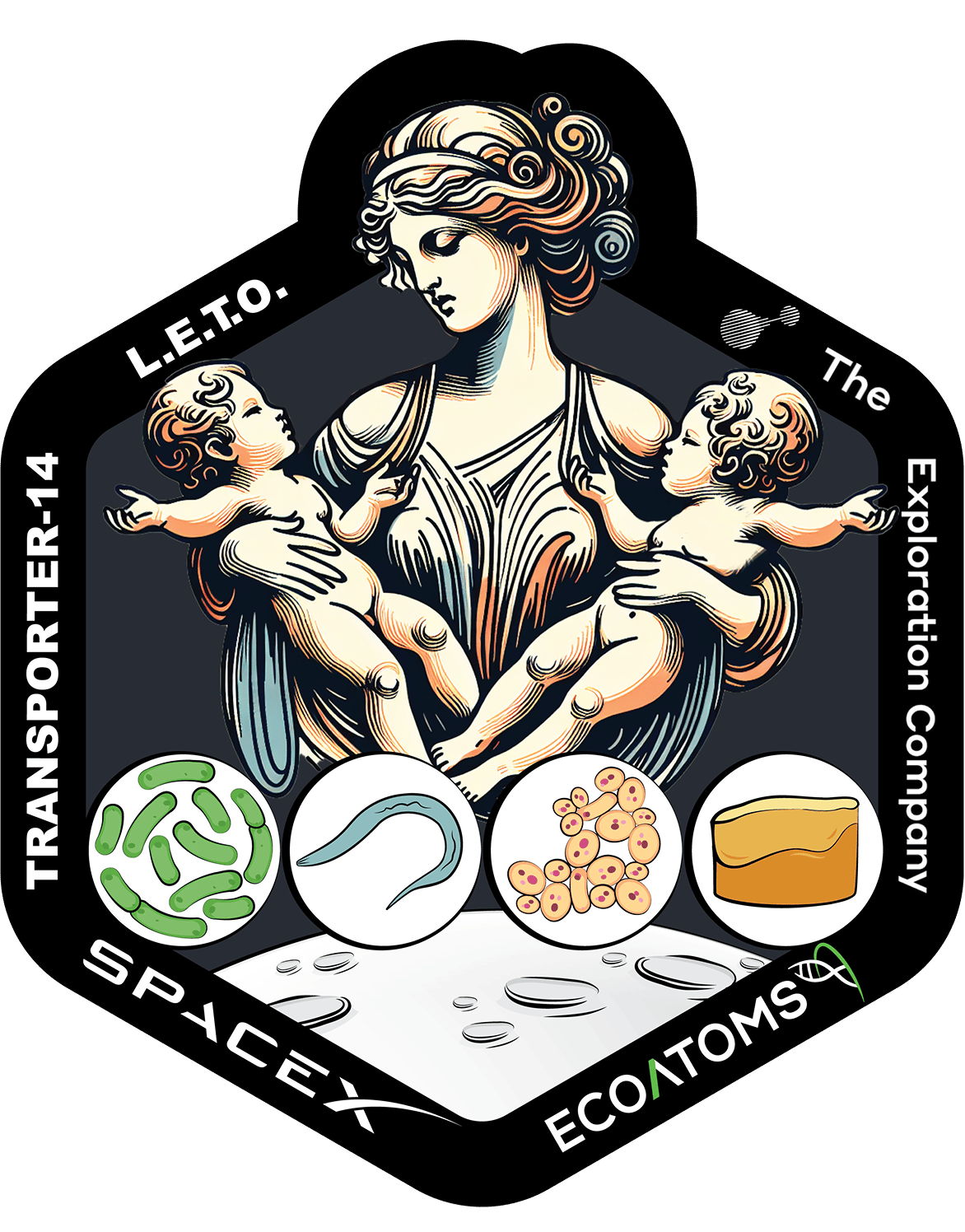
L.E.T.O.
2025
L.E.T.O. (Lunar Ecosystem for Terrestrial Organisms) is Ecoatoms’ payload designed for biological research in space. It launched on SpaceX Transporter-14 on June 23, 2025, and reached low Earth orbit (LEO), carrying a range of terrestrial biological samples. The system includes sensors for temperature, O₂, CO₂, pressure, and humidity, along with real-time cameras, to maintain and monitor controlled conditions during orbital operations. L.E.T.O. provides a compact, self-contained environment for studying biological responses in microgravity, with real-time data streaming for analysis. Built for reliability, it supports integration across multiple vehicles and orbital platforms, offering flexibility for extended missions toward Mars.
Custom Payload
2025
The Custom Payload, developed for a Global Fortune 500 client, is a tailored platform for orbital experimentation. It launched to low Earth orbit (LEO) on SpaceX Transporter-14 on June 23, 2025. Designed to client specifications, the payload includes adaptable configurations, precision sensors, and real-time data streaming to support customized research objectives in space.

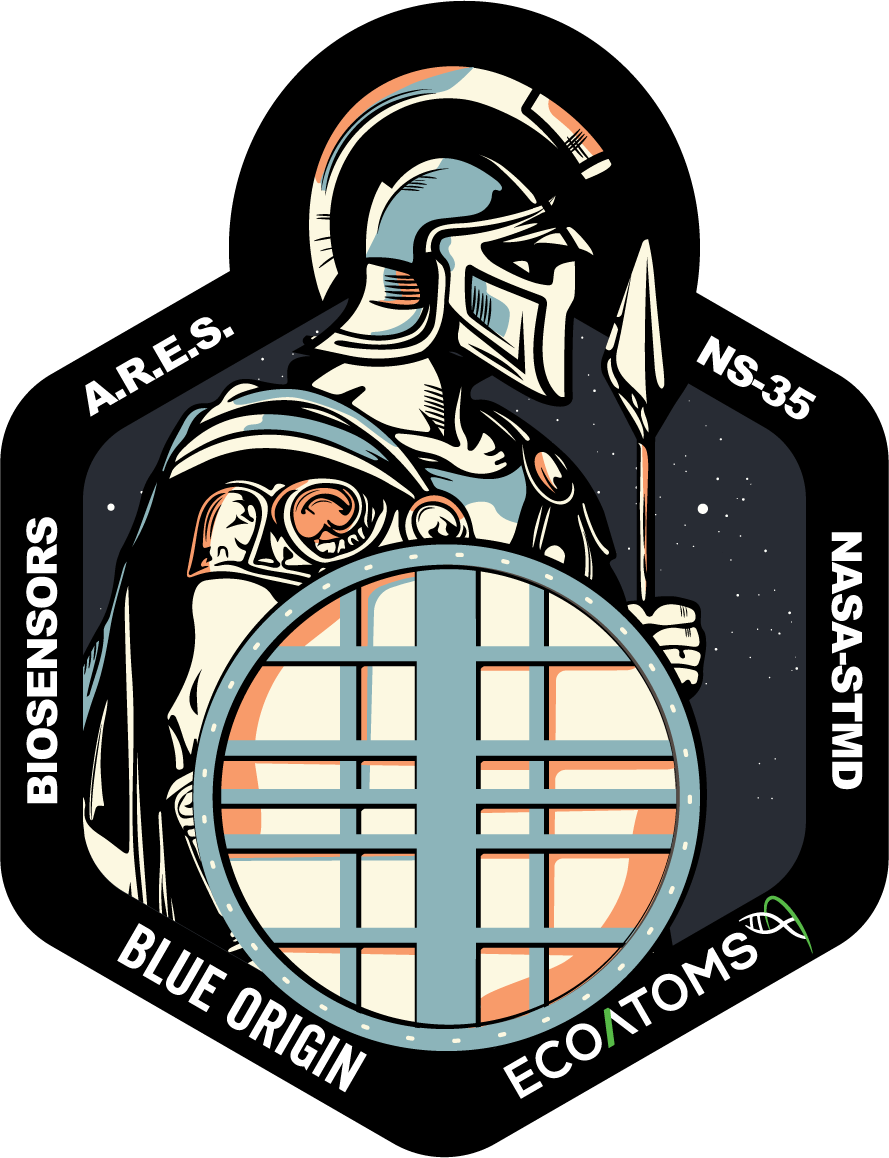
A.R.E.S.
2025
A.R.E.S. (Advanced Reinforced Engineering Structure) is Ecoatoms’ in-space manufacturing payload for automated chemical coating of biosensors in microgravity. Validated at TRL 9 during its flight on Blue Origin’s New Shepard NS-35 on September 18, 2025, the system demonstrated simultaneous coating of hundreds of biosensors, confirming feasibility and repeatability for orbital production. A.R.E.S. supports efficient resource use and scalable fabrication in microgravity, with proven performance from flight testing and engineering design. It is available to support ambitious high-throughput manufacturing experiments across suborbital and orbital missions.
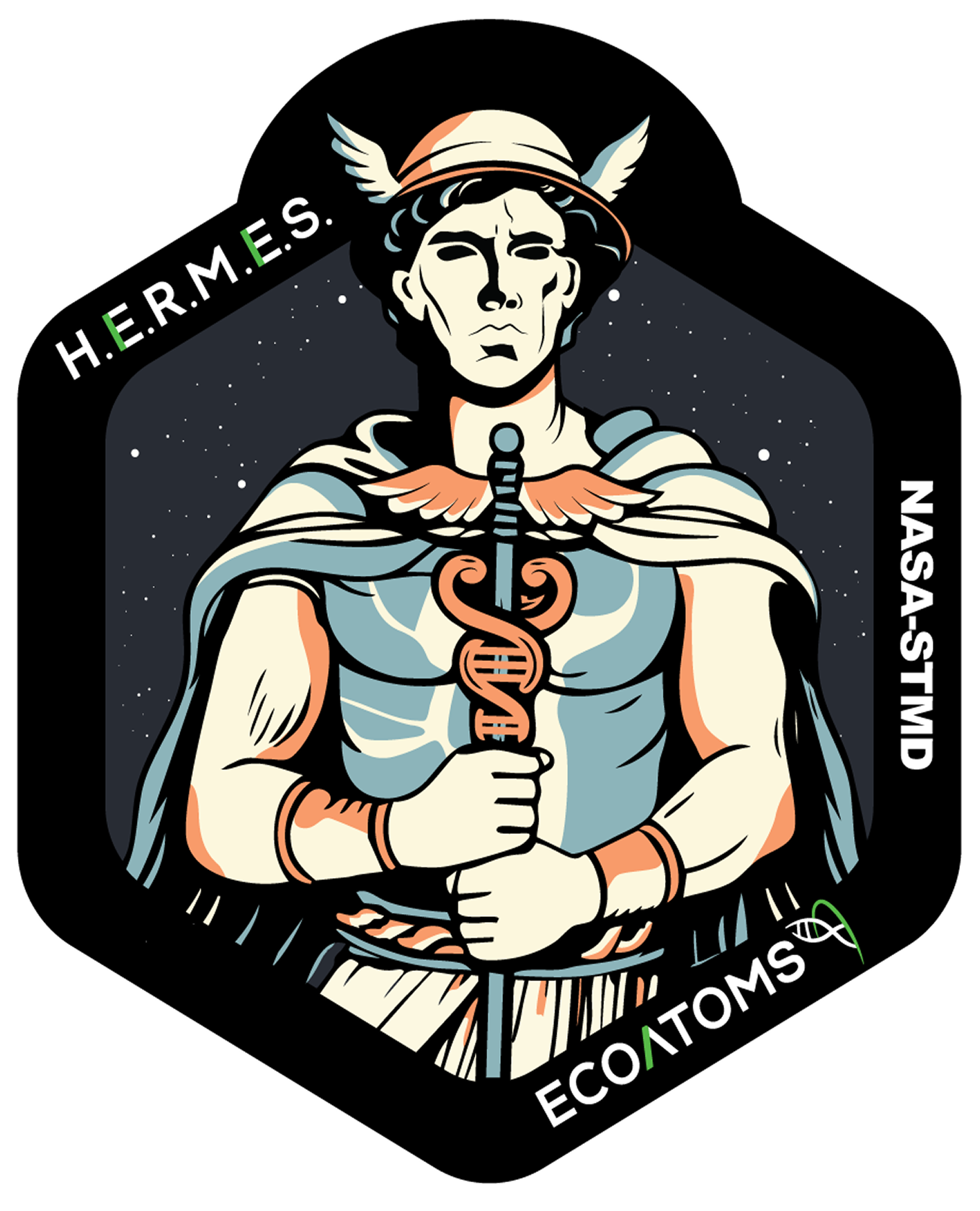
H.E.R.M.E.S.
2026
H.E.R.M.E.S. (Hardware for Extraction and Reagent Mixing in Experimental Studies) is Ecoatoms’ automated payload designed for DNA extraction and processing in microgravity. Supported by NASA it is scheduled to launch in 2026. The system handles genetic material from diverse biological sources and reduces hands-on astronaut time from hours to seconds for sample preparation and analysis. H.E.R.M.E.S. enables efficient, repeatable genetic experiments in orbit with high precision and minimal crew involvement, supporting research for space exploration and terrestrial applications.
A.N.I.M.A.
2026
A.N.I.M.A. is Ecoatoms’ orbital on-board computer designed for edge computing in space. Rated TRL 9, it successfully operated during its 2025 flight on Blue Origin’s New Shepard. A NASA-supported follow-on mission is planned for 2026. A.N.I.M.A. interfaces with more than 20 spacecraft and payloads, serving as a central platform for real-time data processing and mission coordination across suborbital, orbital, and lunar environments.
Book your flight